|
syslog-ng source
|


|
|
syslog-ng source
|
|
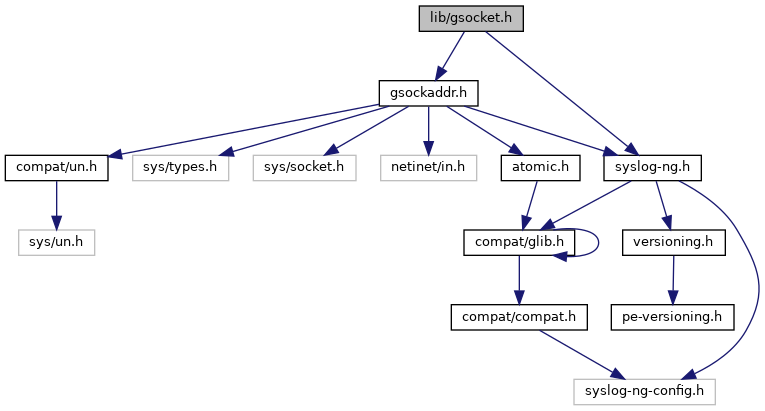

Go to the source code of this file.
Functions | |
| GIOStatus | g_bind (int fd, GSockAddr *addr) |
| GIOStatus | g_accept (int fd, int *newfd, GSockAddr **addr) |
| GIOStatus | g_connect (int fd, GSockAddr *remote) |
| gchar * | g_inet_ntoa (char *buf, size_t bufsize, struct in_addr a) |
| gint | g_inet_aton (const char *buf, struct in_addr *a) |
| GSockAddr * | g_socket_get_peer_name (gint fd) |
| GSockAddr * | g_socket_get_local_name (gint fd) |
| GIOStatus g_accept | ( | int | fd, |
| int * | newfd, | ||
| GSockAddr ** | addr | ||
| ) |
g_accept: @fd: accept connection on this socket @newfd: fd of the accepted connection @addr: store the address of the client here
Accept a connection on the given fd, returning the newfd and the address of the client in a Zorp SockAddr structure.
Returns: glib style I/O error
| GIOStatus g_bind | ( | int | fd, |
| GSockAddr * | addr | ||
| ) |
g_bind: @fd: fd to bind @addr: address to bind to
A thin interface around bind() using a GSockAddr structure for socket address. It enables the NET_BIND_SERVICE capability (should be in the permitted set.
| GIOStatus g_connect | ( | int | fd, |
| GSockAddr * | remote | ||
| ) |
g_connect: @fd: socket to connect @remote: remote address
Connect a socket using Zorp style GSockAddr structure.
Returns: glib style I/O error
| gint g_inet_aton | ( | const char * | buf, |
| struct in_addr * | a | ||
| ) |
| gchar* g_inet_ntoa | ( | char * | buf, |
| size_t | bufsize, | ||
| struct in_addr | a | ||
| ) |
g_inet_ntoa: @buf: store result in this buffer @bufsize: the available space in buf : address to convert.
Thread friendly version of inet_ntoa(), converts an IP address to human readable form. Returns: the address of buf
| GSockAddr* g_socket_get_local_name | ( | gint | fd | ) |
| GSockAddr* g_socket_get_peer_name | ( | gint | fd | ) |
 1.9.1
1.9.1